

by Roberta del Vaglio.
From the rules of engineering to the freedom of form: Matteo Francesco Greco's journey stems from the encounter between design rigor and a sensitivity to beauty.
There's a point where rules meet poetry, and for Matteo Francesco Greco, that point coincides with design. A civil engineer by training, but "atypical" by vocation, Greco has forged his own path by combining two seemingly distant attitudes: structural rigor and a curiosity for everything that makes a space truly habitable. After years in Milanese architecture and interior design studios and the founding, in 2019, of AMG+ on Lake Garda, design has gradually become a field of personal exploration.
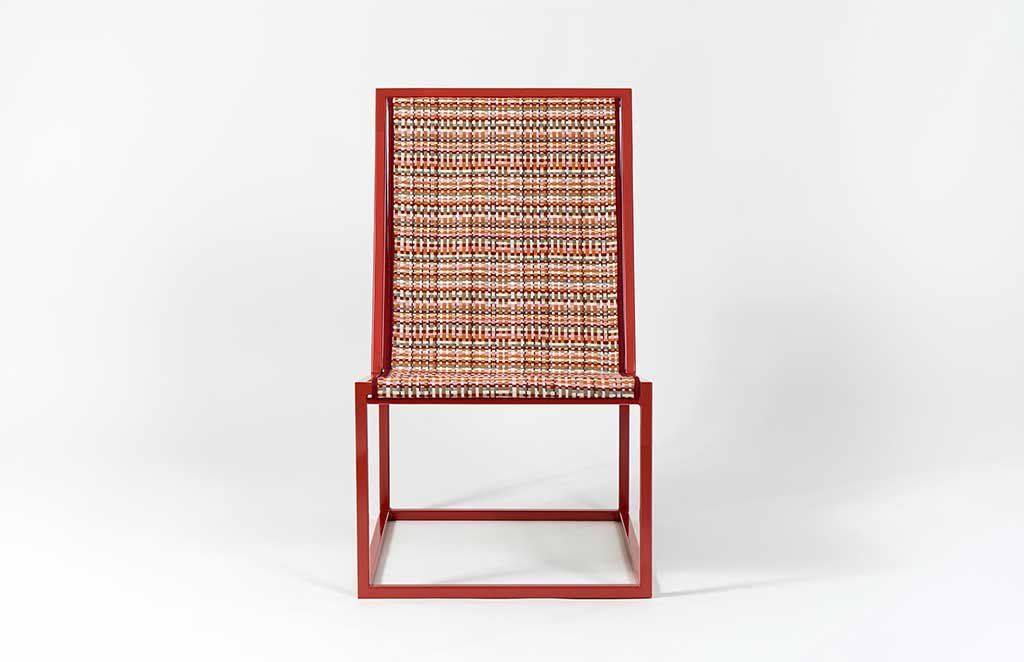
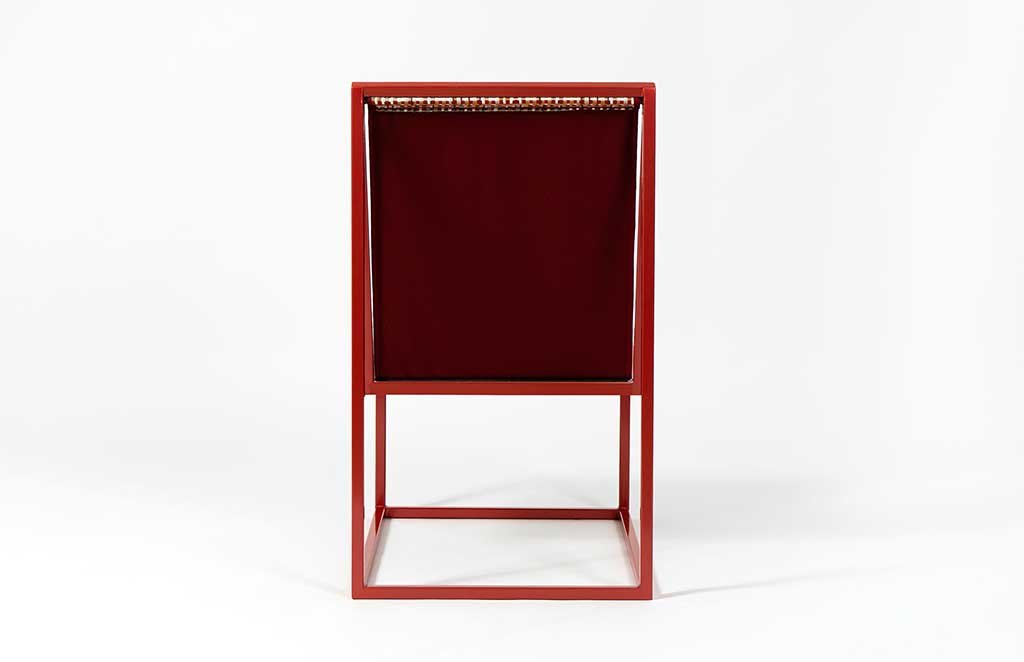
The first project arrived at the Fuorisalone in 2017; in 2024, the debut at EDIT Napoli, together with the artisan company Zanchi, opened a new chapter. It is from that experience that Be(Forma) was born , a creative platform – even before being a brand – where objects, intuitions and a very personal way of looking at the world converge. The starting point is observation, which Bruno Munari indicated as the essential premise of design. Looking, transforming, giving a new function to forms: for Greco, design thus becomes an exercise in curiosity, memory and poetry. And so, at the latest edition of the Fuorisalone he returned with Be(Forma) and the Sedia 225 : essential and almost archetypal, in which metal, proportions and material meet, giving shape to a project that places functionality, essentiality and durability at its core.
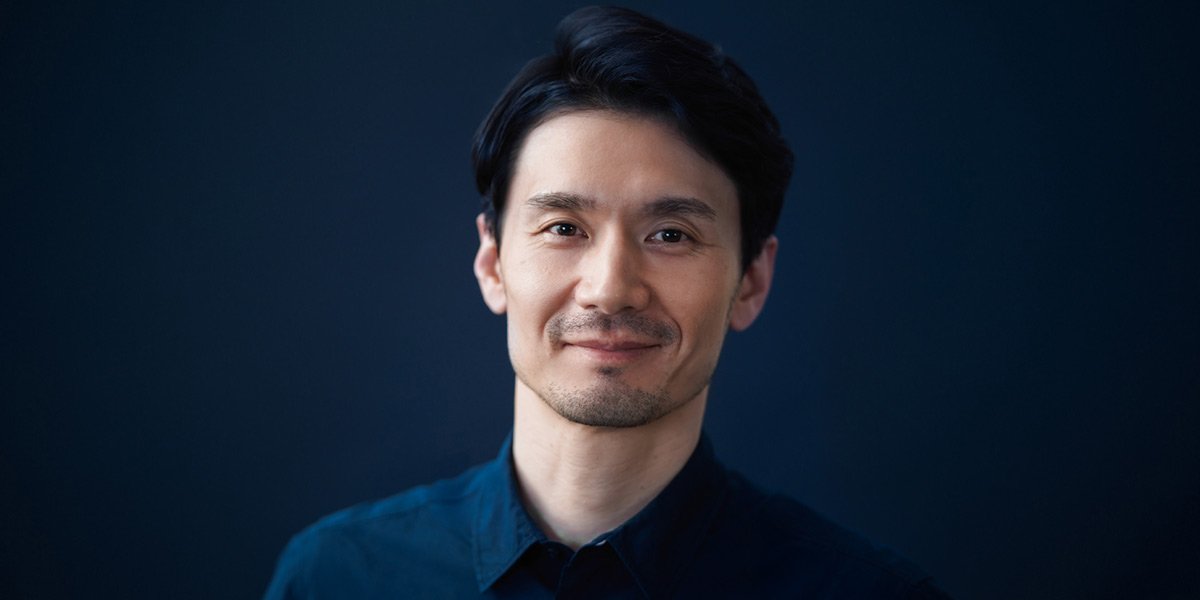
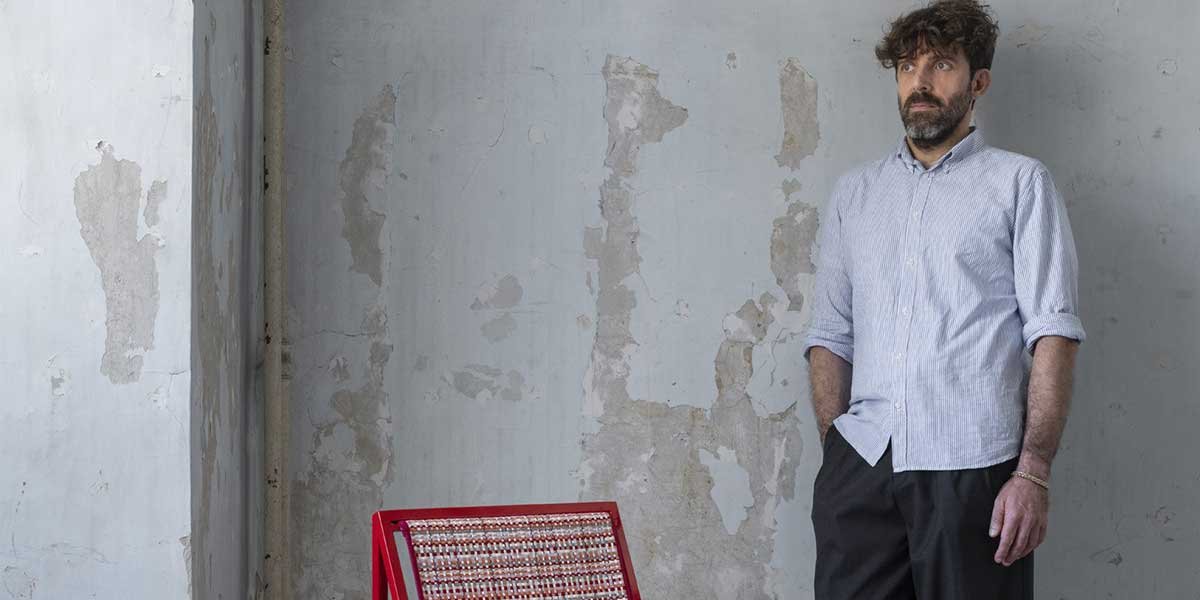
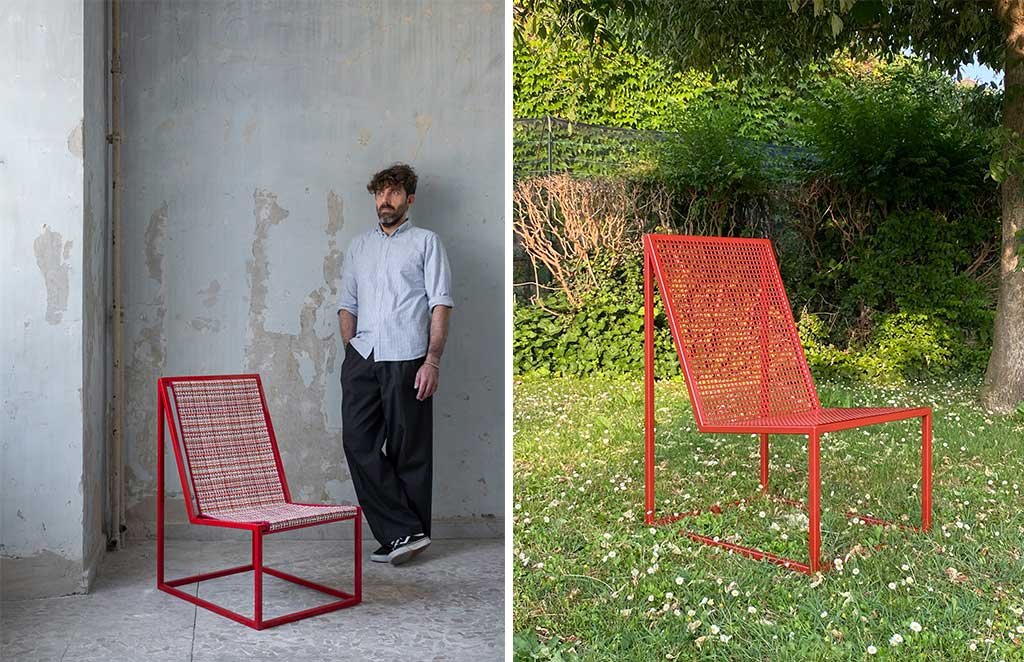
Designer Matteo Francesco Greco in an image from EDIT Napoli 2025 with his Sedia 225. Photo © Serena Heller. Next, an image of the Sedia 225: metal, for indoor and outdoor use, and handmade.
How did your journey begin? Was there a specific moment when you realized you wanted to be a designer? And how much did your engineering background influence your approach to design?
My journey as a designer began many years ago. As a teenager, I jotted down imaginative projects and ideas everywhere, on sheets of paper and in the corners of notebooks. However, it took a long time to realize that these projects and ideas needed to materialize. It was a wonderful journey that I don't regret, and which finally brought me peace of mind. My training is not traditional: I come from the world of engineering, and my technical approach, the simplification of lines and shapes in my work, certainly derives from that world.
Good design enters our everyday lives almost unnoticed. In your opinion, what qualities make an object truly capable of improving our daily lives?
In my opinion, design must better respond to specific needs and the functions required of it, in order to improve the experience and therefore the life of those who use it. For example, a chair can be simply made from a parallelepiped made of wood or another material. It responds to a need—the seat—and has its function. Design allows that need and function to be improved by working on comfort, ergonomics, and aesthetics. However, the focus must remain on function. Unfortunately, I don't see a similar balance these days. Often, we seek aesthetics alone at the expense of other things, or, conversely, functionality at the expense of beauty. In my opinion, the secret lies in balance.
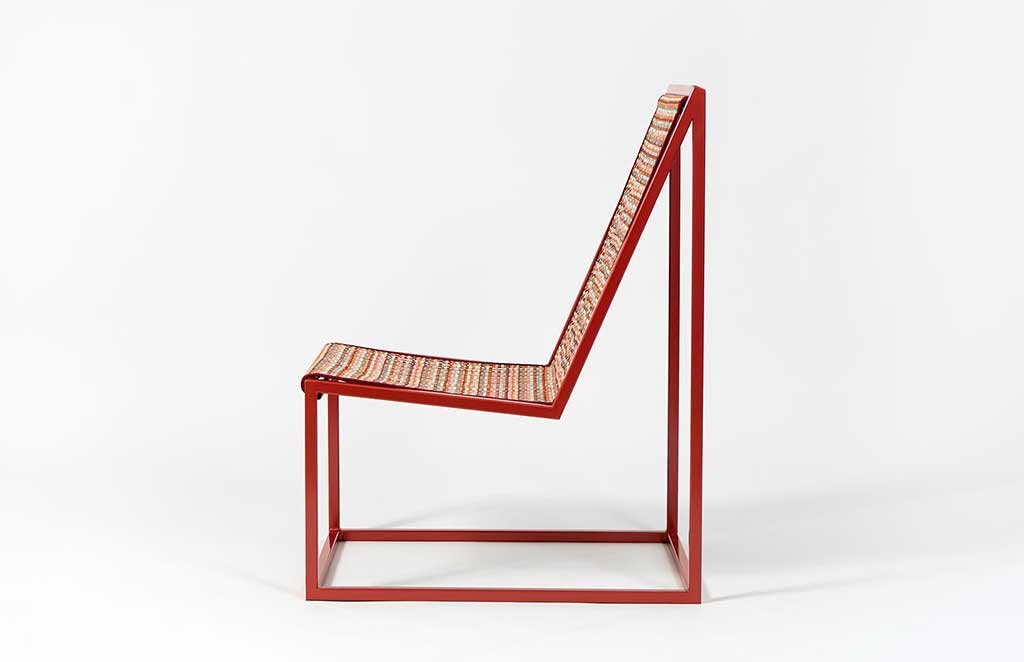
The 225 Chair by Matteo Francesco Greco from various points of view that highlight its geometric and essential profile, inspired by the Bauhaus aesthetic.
Materials, shapes, technology, and sustainability: which of these aspects most guides your creative process today, and how do you find a balance between all these elements?
"Materials and shapes respond first to the creative idea. Technology and sustainability immediately intervene in my creative process, to improve it and make it concrete and feasible."
Is there an object in your home—even the simplest or most underrated—that you wish you'd designed? Why that one?
Castiglioni's switch. It's the sum of my approach to design: it responds to a question and its function in a simple, honest, and aesthetically pleasing way. This has subtly improved our lives and makes it a unique and inimitable object, as well as difficult to replace.
What's the must-have item in your home that best reflects your lifestyle?
«Beautiful lamps.
If you had to give just one piece of advice to someone who wants to furnish their home with greater awareness, what would it be?
"To stop and reflect on your own needs and requirements, without following trends at all costs or chasing appearances. Your home is a reflection of yourself and must be designed accordingly if you want to feel comfortable there."
Complete this sentence: “A house is truly tidy when…”
"...when it meets the needs of those who live there (and, perhaps, has some of my pieces among the furnishings!). When you enter that kind of home, you sense and find it balanced even if it's not perfect. A tidy home "speaks" and communicates a lot about its inhabitants."
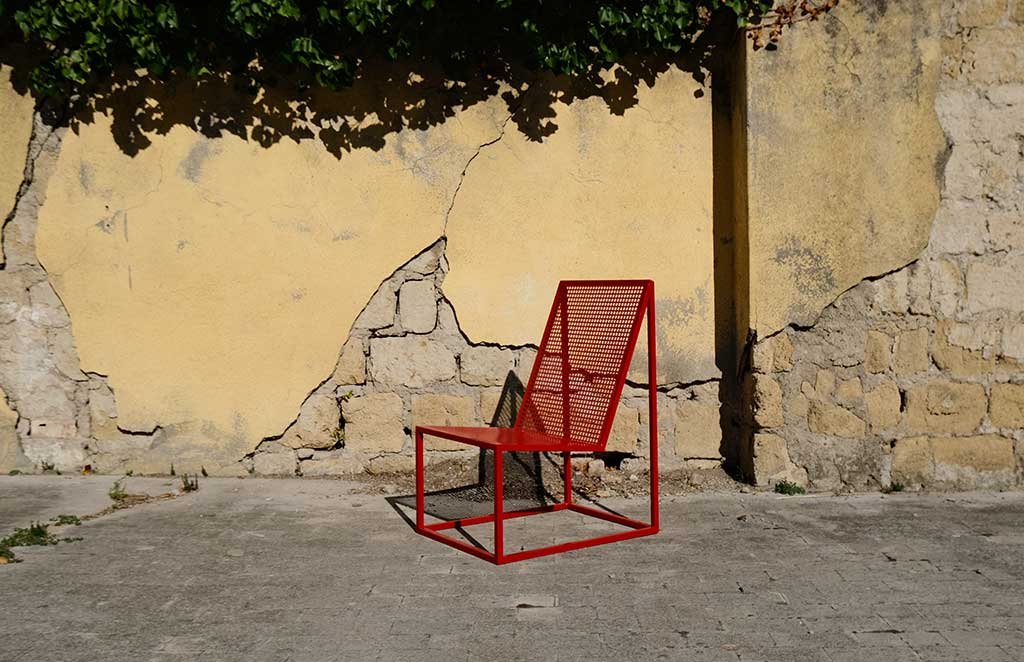
The 225 Chair by Matteo Francesco Greco is also designed for outdoor use.
On the cover, Matteo Francesco Greco. Photo © Serena Heller.